August 7, 2018
Editor’s Note: This post was updated on August 6, 2018, for accuracy and comprehensiveness. It was originally published on February 24, 2016.
Protein has a bit of a PR problem.
Many people correctly associate protein with muscle mass, as well they should since protein and the amino acids that make it up constitute the building blocks of the muscle tissue in your body. If your muscles are a house, protein is the bricks.
Many people think that eating too much protein is going to make them automatically “bulk up.” This isn’t true, and this leads to a misunderstanding about this essential nutrient and the overall need for muscle mass.
They think that they don’t need protein if they are only trying to get fit or toned.
But this is belief is self-defeating. That’s because when people say they want to be toned – whether they know it or not – are actually saying they want to improve their body composition by reducing their fat mass and increasing their Lean Body Mass. Protein plays an important role in both of those aspects and in achieving that toned fit look.
Where the “Bulky” Look Comes From
Most people who want to get toned say this because they don’t have any desire to be as huge as a professional bodybuilder. That’s understandable. It’s an extreme sport – bodybuilding requires your body to undergo drastic changes and huge amounts of physical development as well as specialized nutrition that, yes, typically involves consuming supplemental protein.
However, it’s not the protein that causes bodybuilders to look the way they do. It’s what they do to their body composition in their training that leads to their huge, ripped look.
When people imagine what a bodybuilder looks like, what they’re actually imagining is a bodybuilder in competition shape.
In order to get into competition shape and get the defined look, a bodybuilder must drop their body fat percentage to dangerously low levels that near their essential fat levels, which for men is about 3% and women 10-12% body fat. That type of body composition looks like this:
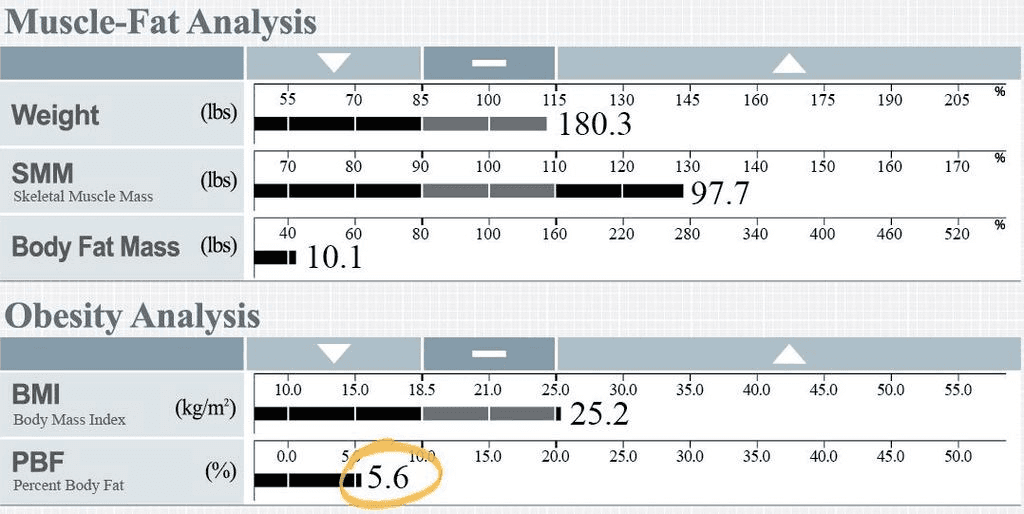
If your body composition looks like this, you will have huge, bulky muscles visible all over your body. And decreasing your body fat percentage to such a low level will have negative effects on your hormone levels, hurting your well being. For most people, this isn’t the goal.
Bodybuilders are one end of the extreme, but what’s on the other end isn’t much better.
The Consequence of Low Protein: Skinny Fat
You’ve probably heard a lot about being skinny fat. Skinny fat people look skinny but flabby: not toned and with no definition to their body at all.
Someone who is “skinny fat” is someone who looks skinny and has a “normal weight” according to the BMI but internally shares many characteristics with someone who is obese.
Normal weight, but obese? How is that possible? Skinny fat is actually a popular term for a real medical condition called sarcopenic obesity. Someone who is sarcopenic obese has very low levels of skeletal muscle mass for someone of their weight. They have body composition profiles that look like this:
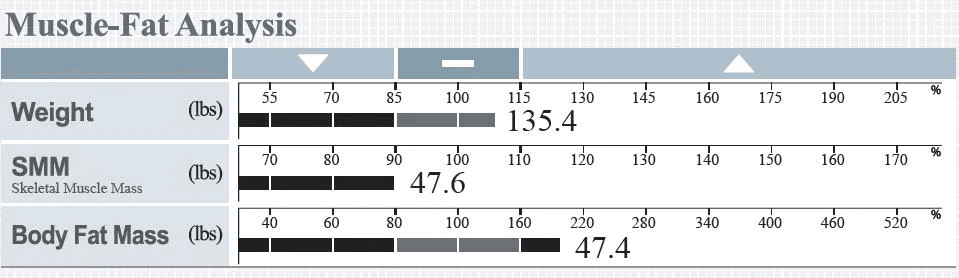
Notice the large difference between the lengths of the bars showing Skeletal Muscle Mass. It’s the complete inverse of the bodybuilder’s composition that we saw above. Far from being close to essential fat, this person’s body fat percentage is 35%, 7% over what is considered healthy for women.
How do people become skinny fat? One “popular” way to become skinny fat is actually something a lot of people believe to be “good fitness advice” for losing fat: cut calories and do tons of cardio without a focus on nutrition or muscle development. If this sounds like your workout strategy, you could be sabotaging yourself by breaking down your muscles.
A study in the Journal of Physiology examined a group of test subjects and had them do leg exercises under interesting circumstances: one leg was brought to a glycogen-reduced state (by exercising only that leg) and tested against the other leg with normal levels. The results? The researchers observed a net degradation of muscle tissue in the glycogen-reduced leg.
By avoiding proper nutrition and muscle development, you will get no closer to achieving a toned look. You’ll probably be flabby and skinny fat.
Protein and Muscle Are Key For Everyone

So if bodybuilders are too bulky but skinny fat people are too flabby, how do you reach a goal of becoming and looking toned?
Develop a lean body composition. What’s a lean body composition? One that is characterized by sufficient development of muscle mass and low amounts of fat mass: a kind of happy medium between a bulky bodybuilder and a skinny fat person.
In order to develop a lean body composition, you have to develop your Lean Body Mass. To develop your Lean Body Mass, you need to do some type of weight or resistance training. But in order to be successful, you need to give your body the nutrients it needs to grow: carbohydrates, fats, vitamins, minerals and most importantly: protein.
This doesn’t mean that you have to guzzle down shakes like you see bodybuilders and other athletes at the gym do. In fact, overloading yourself on protein to develop your muscles is a complete myth.
In a study published in the Journal of the International Society of Sports Nutrition, researchers compared the muscle development of three groups of athletes on the same exercise regimen, but different levels of protein intake. One group was given less than the daily recommended amount (1.4g/kg of body weight), one group the recommended level (1.8g/kg of body weight), and one group over the daily recommended level (>2.0kg/ of body weight).
The researchers found no recorded benefit in strength or body composition changes in the group that exceeded the recommended amount of protein needed for strength training. They found that 0.8 – 0.9 grams per pound of body weight was sufficient to see favorable changes in body composition.
Let’s say you weigh 125 pounds, and you’re working to increase your Lean Body Mass. You would need to set a target of about 100 grams.
100 grams might seem like a lot, but consider that 1 cup (140 grams) of chicken contains 43 grams of protein. That’s just the protein in just one part of just one meal in your day. A can of tuna can contain as much as 49 grams. With a cup of chicken and a can of tuna, you’d almost entirely meet your protein needs. Add in a glass of 2% milk (9-10 grams), and you’re well over 100 grams for the day.
As you can see, getting the protein you need to develop your Lean Body Mass and build a toned body isn’t actually very hard, but you do need to be aware of your nutritional needs so that you can meet them.
Think about your dietary choices. If they include lots of fruits and vegetables, that’s great! But if you’re not supplementing your enough protein in your diet from high protein foods such as meat and fish, you can easily have several days where you don’t meet your protein requirements.
More Protein = More Muscle and Less Fat
Developing your body through strength training and giving it the protein and other nutrients it needs to grow efficiently have another bonus: increasing your metabolism. It’s an added bonus that can help you shed fat, which is what many people set out to do when they get on a diet and exercise plan.
The muscle that you can grow and develop through exercise is called Skeletal Muscle Mass. Skeletal Muscle Mass is also the largest component of your Lean Body Mass. That’s important because, as research has shown, increased Lean Body Mass leads to increases in Basal Metabolic Rate – what you probably refer to as your “metabolism.”
Your Basal Metabolic Rate (BMR) is the total number of calories that your body requires to maintain its Lean Body Mass at rest, and any increase in your BMR adds to the total number of calories your body burns in a day. How does this help you lose fat?
According to the Centers for Disease Control, you need to burn more calories than you eat to lose fat mass. Assume for the moment that your total caloric needs for the day are 2,500 Calories and you eat exactly 2,500 calories to match. That’s called being in a “caloric balance.”
Now suppose that through proper nutrition and exercise, you increase your Lean Body Mass over the course of several months and your BMR increases by 250 calories as a result. Now your body will require 2,750 calories to maintain your weight. Now provided you maintain your diet at 2,500 calories and don’t start eating more, that metabolism increase of 250 calories becomes a -250 caloric deficit, which, if you can maintain over the course of weeks and months with proper diet and exercise, can lead to you losing fat.
Diet and Exercise Works (but you knew that)

It’s natural for people to want shortcuts – you only need to be on the internet for a few minutes before you find the latest fad diet/juice cleanse/detox that claims to be the “one weird rule” that will unlock the key to fat loss. Shortcuts and “life hacks” offer the promise of fantastic results without having to put in the hard work.
However, the truth is that the age-old advice for fitness – diet and exercise – is always going to be the most reliable and consistent way to reach your fitness goals and get you the look you want. And part of that age-old advice is: consume enough dietary protein. It’s not going to make you bulky, huge, or anything of the sort unless you push your body to grow that way with heavy exercise.
Protein is a macronutrient, and together with carbohydrates and fat, is one of the three main sources your body uses for calories. It’s not a synthetic growth hormone-like steroids. Protein is as important to you as any other nutrient source.
So don’t be afraid of protein!
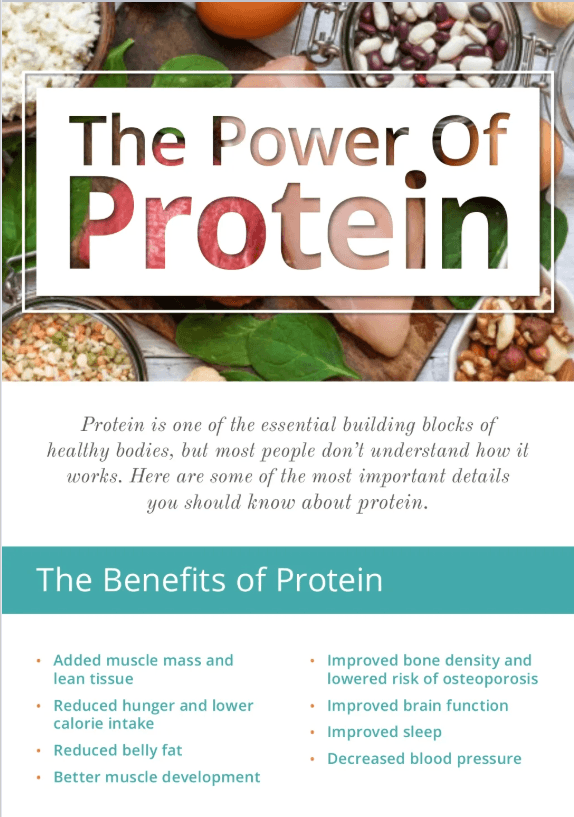
The Power Of Protein
When you want to build a healthy body, you have to get the right amount of protein. Protein is one of the most essential components of muscle development, bone density, muscle mass and lean tissue — and that’s just the beginning. In truth, protein is necessary for all your body’s physiological functions. Today, while many people who care about health know protein matters, most don’t understand how or why. Part of that is because there are so many misconceptions about this vital building block, especially in the fitness and weight loss worlds.
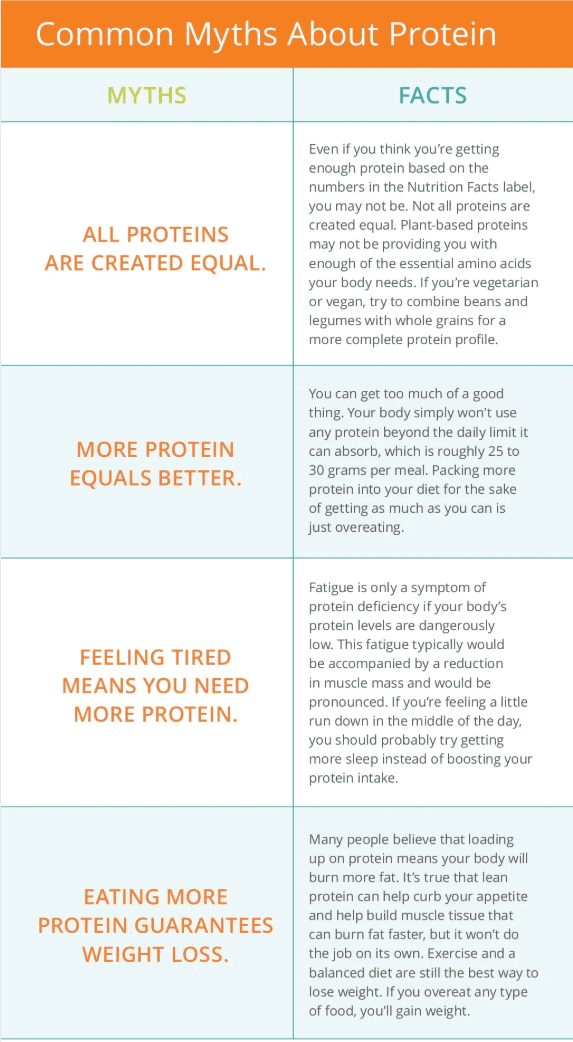
Have you heard someone say all proteins are created equal, for example?
Has anyone ever told you that the surefire way to guarantee weight loss is to boost your protein intake?
Do you think the more protein you consume, the better?
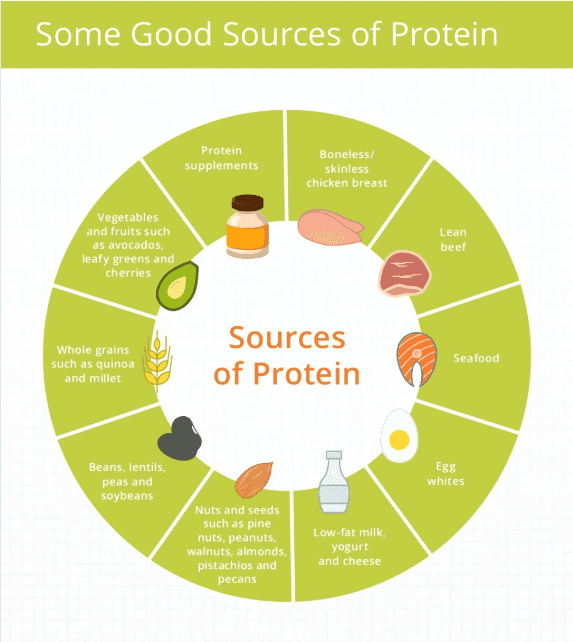
If so, it’s time to look at the facts. Protein is indeed vital to a healthy body, but possibly not in the ways you’ve thought. Take a look at the accompanying checklist, which provides a clear breakdown of the truth about this important substance. Find out what benefits it offers, where to get it in food, and what common myths may be deceiving you.

The Power of Protein was created by the Center for Weight Loss Surgery
Author bio: Dr. Myur S. Srikanth is a board-certified bariatric and cosmetic surgeon at the Center for Weight Loss Surgery. He has been performing bariatric surgery exclusively since 2000 and has performed over 3,500 weight loss surgeries. Dr. Srikanth performs nearly every operation that is currently available to treat obesity.