
June 27, 2018
In today’s society, comfort is king. Much of our technology – air conditioning, heated pools, goose-down jackets, portable misting fans – is designed to keep us within a comfortable band of temperatures. There’s nothing so good as A/C on a summer day.
But humans did not evolve with these modern comforts. Instead, we evolved on hot grasslands, cold tundras, and every climate in between. As a result, our bodies developed adaptive mechanisms to deal with the extremes of hot and cold.
These mechanisms are actually beneficial to our health. Outside our comfort zone, hormones are released, metabolic changes occur, inflammation is dampened, and that’s just a few of the benefits. With enough cold exposure, in fact, even our fat tissue changes color and characteristic and starts using more energy. Not bad.
Cold exposure, as you probably guessed, is the intervention we’ll be focusing on today. Exposed to cold water or air, your body responds with a variety of adaptive changes. This response is called hormesis, and it’s the same process underlying the benefits of exercise.
So how does this response to cold change your metabolism and increase health benefits? Let’s find out.
Cold Boosts Metabolism

Before digging into whys and hows, let’s first look at proven metabolic changes that cold exposure can deliver.
In one study, exposing mice to 4℃ air (39°F) for 1-8 hours 3 times per week increased their metabolism and improved their blood sugar response. The cold hungry mice ate so much to compensate for their higher energy burn that they didn’t lose any weight.
In another study, this time on humans, young men were immersed up to their necks in cold water of various temperatures – 32°C (89° F), 20℃ (68°F), and 14°C (57°F) – for one hour. Afterwards, various biomarkers were measured.
The results? Under the cold conditions, the young men’s resting metabolism increased by 93% in the 68°F water and 350% in the 57°F water. Under the warm condition, though, no metabolic change was observed.
Shivering to Stay Warm
If you wallow in cool water long enough or brave the winter frost wearing only a Speedo, eventually your muscles will start to quiver involuntarily. It’s your body saying hey, I’m going to keep you warm whether you like it or not.
This is called shivering thermogenesis, and it’s one way your body maintains its core temperature in frigid environments. Shivering generates heat (that’s the thermogenesis part), and this increase in heat means a boost to your metabolism.
Although shivering thermogenesis accounts for some of the metabolic benefits of cold exposure, the more lasting benefits come from another adaptive mechanism: non-shivering thermogenesis.
Staying Warm Without Shivering
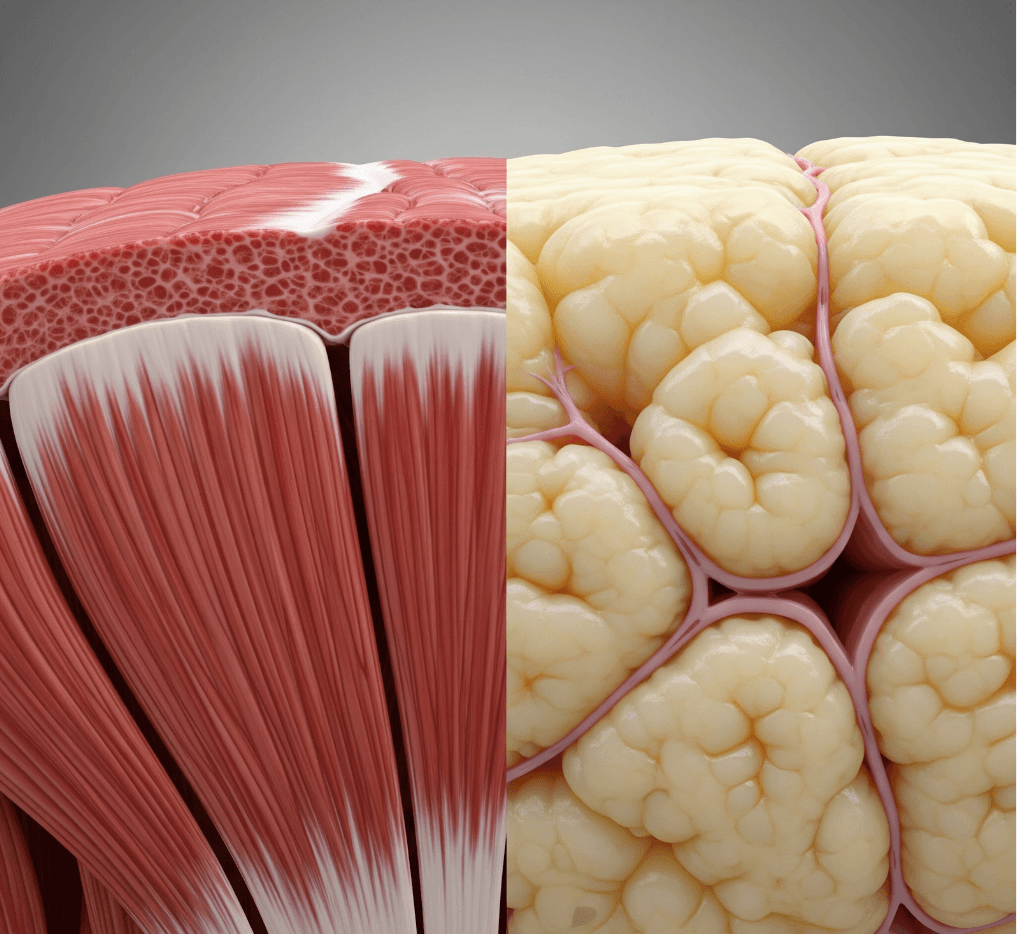
No, shivering isn’t the only way your half-naked body stays warm on a blustery winter day. You’re also kept warm by a special, metabolically active form of fat tissue called brown fat.
Brown fat, also called brown adipose tissue, converts food energy into heat energy. It keeps you warm without you having to shiver. Brown fat, then, is your secret weapon for nonshivering thermogenesis, which is way more fun than shivering to stay warm and burn more calories.
From a body composition perspective, having more brown fat is generally a good sign. Overweight and obese men, one study revealed, had less brown fat than healthy men. In that same study, brown fat activity was also positively correlated with metabolic rate.
Super Mitochondria in Brown Fat
It makes sense that higher brown fat activity is linked to higher metabolism. That’s because brown fat is packed full of mitochondria, our cellular energy centers. More mitochondria means more energy production.
But the mitochondria that give brown fat its distinctive brown color aren’t just any old mitochondria. These special mitochondria contain a protein called uncoupling protein 1 (UCP1), which create energy in the form of heat. That’s how you stay warm without shivering.
A bit more detail on how this works. Mitochondria need food (like fatty acids and glucose) in order to produce energy. UCP1 super mitochondria, found in brown fat, are great at turning food into energy – specifically, heat energy.
In other words, when active, brown fat burns both fat and sugar to keep you warm.
From a metabolic perspective then, brown fat is pure gold. How do you get more of it? If you’re thinking cold pool, snow angels, cold showers, ice baths, or cryotherapy, you’re on the right track.
Browning Your Fat
If you want to turn your fat brown, cold exposure is the quickest way to accomplish that goal. You don’t need to shiver, but you might have to get a bit uncomfortable.
The good news is: the more brown fat you have, the less uncomfortable cold will make you. That’s because, as we covered earlier, the super-mitochondria in brown fat keep you warm through their special, UCP1-powered nonshivering mechanism. This, in turn, boosts your metabolism.
So what kind of cold exposure is required to brown your fat? Let’s look at some peer-reviewed research.
In one 2013 study, 8 men and 9 women were exposed to cool temperatures once a day for 10 days. While the exposure wasn’t very cold, it was enough to induce a response. And the response, in both men and women, was increased energy expenditure during the procedure.
The cold group also showed significant increases in nonshivering thermogenesis after the cold acclimation period. This means that, after being in a cold environment, these men and women became better able to convert food energy to heat – an adaptive response to the cold.
Along these lines, the final (and probably most interesting) finding in the study was the robust increase in brown fat tissue observed in the 17 subjects (a 37% increase, to be precise). “The current study shows, for what we believe is the first time,” write the authors, “highly significant [brown fat] recruitment in human adults after a 10-day period of cold acclimation.”
This research proves that it doesn’t take Game of Thrones, “winter is coming”, levels of cold to induce brown fat formation. Good news for all you non-polar bears out there.
Norepinephrine: The Magic Cold Chemical
Now that we know we can actually increase brown fat in our body, how does this actually happen? When you expose yourself to cold, brown fat doesn’t simply materialize in a poof of mitochondria. A chemical needs to be present, and that chemical is norepinephrine.
Norepinephrine, also called noradrenaline, functions as both a hormone and neurotransmitter in your body. It regulates, among other things, your mood, attention, focus, and arousal. It’s one of your feel-good hormones.
Norepinephrine also signals your body to activate brown fat, which is why you’re reading about this industrious hormone now. How does this signal get initiated? You guessed it: cold temperatures.
Here’s how it works. First, cold sends a signal to your sympathetic (fight or flight) nervous system. Next, your nervous system dumps massive amounts of norepinephrine into your brown fat cells, causing these cells to burn food and produce heat. Finally, as an adaptation to the cold, your body turns more of your fat brown.
Plus all those endorphins make you feel good. It’s a win-win.
Can Cold Help You Lose Weight?

Okay, we know that cold increases metabolism. But what about using cold exposure as a weight-loss therapy?
To answer this question, we return to the cold hungry mice from the beginning of the article. Recall: despite improvements in metabolism and blood sugar, the mice didn’t actually lose weight. That’s because they gorged themselves on mouse chow to compensate for their higher energy expenditures.
The takeaway? If you’re using cold exposure to lose weight, be mindful not to overeat. Avoid that pitfall, and cold-induced nonshivering thermogenesis shows promise.
“Increasing the amount and/or function of [brown fat] could be a safe and effective therapy to limit obesity,” speculate Patrick Seale and Mitchell Lazar in the journal Diabetes.
How Cold?
To reap the benefits of cold, how cold do you need to get? Not extremely.
In the earlier study, one hour of 68°F exposure stimulated a 93% increase in metabolic rate. Colder water turns up the benefits, with 57°F water translating to a 350% increase in metabolism.
For cold air, though, the temperature to reap benefits is lower than for water and probably begins around 15° C (60° F). For instance, exposing people to 6 hours of 60°F for 10 days significantly increased energy expenditure and was also associated with a 37% increase in brown fat.
Recap
Let’s go over everything one more time.
Cold exposure increases metabolism in two main ways: shivering thermogenesis and nonshivering thermogenesis. Nonshivering thermogenesis is mediated by a special kind of mitochondrial-dense fat called brown fat, which converts food to heat and keeps you warm without shivering.
What stimulates brown fat activity? Cold of course. Cold signals the nervous system to release norepinephrine, which in turn activates brown fat and increases energy expenditure.
This cold-induced metabolic boost may help with weight loss goals, but it’s no guarantee. Cold rats will overeat, and cold humans could easily do the same.
Finally, cold exposure doesn’t have to be an ordeal. Fairly reasonable temperatures have health benefits on the human body. Plus: the more you expose yourself to cold, the less uncomfortable the cold will feel. Plus, a full-body cold shower can help with any inflammation/swelling and help with blood flow.
So next time you shower, consider turning the knob in an unfamiliar direction. Just don’t expect it to be comfortable the first time around.
**
Brian Stanton is a health writer and certified health coach living outside of Philadelphia. When he’s not hiking through the woods, Brian researches the latest science on nutrition, sleep, longevity, the gut, and more.