Product
BODY COMPOSITION ANALYSIS
BLOOD PRESSURE MONITORS
TECHNOLOGY
COMPANY
Resources
TECHNOLOGY
COMPANY
Product
BODY COMPOSITION ANALYSIS
BLOOD PRESSURE MONITORS
TECHNOLOGY
COMPANY
Resources
TECHNOLOGY
COMPANY


What is InBody Technology?
InBody technology performs direct multi-frequency bioelectrical impedance measurements to assess body composition without relying on population based estimations. Instead of using assumed values or statistical averages, InBody measures impedance at multiple segments of the body to generate high resolution raw data, which is then used to derive body composition parameters based on validated physiological models.
What is InBody Technology?
InBody technology performs direct multi-frequency bioelectrical impedance measurements to assess body composition without relying on population based estimations. Instead of using assumed values or statistical averages, InBody measures impedance at multiple segments of the body to generate high resolution raw data, which is then used to derive body composition parameters based on validated physiological models.
What is bioelectrical impedance analysis (BIA)?
What is bioelectrical impedance analysis (BIA)?
What is bioelectrical impedance analysis (BIA)?
Bioelectrical impedance analysis (BIA) is a method for measuring body composition, including muscle mass, body fat, and total body water. Alternating low and high-frequency electrical currents are sent through the water in the body via contact with electrodes to measure impedance.
Impedance values are then used to determine Total Body Water (TBW), both Intracellular (ICW) and Extracellular Water (ECW). From these, Fat-Free Mass (FFM) is calculated, the portion of your body that does not contain fat, including your muscle and bone - and finally, body fat.
Bioelectrical impedance analysis (BIA) is a method for measuring body composition, including muscle mass, body fat, and total body water. Alternating low and high-frequency electrical currents are sent through the water in the body via contact with electrodes to measure impedance.
Impedance values are then used to determine Total Body Water (TBW), both Intracellular (ICW) and Extracellular Water (ECW). From these, Fat-Free Mass (FFM) is calculated, the portion of your body that does not contain fat, including your muscle and bone - and finally, body fat.
How InBody technology compares to traditional BIA
How InBody technology compares to traditional BIA
How InBody technology compares to traditional BIA
How InBody technology compares to traditional BIA
Traditional BIA
Single-frequency measurement
Single-frequency measurement
Single-frequency measurement
Treats the body as one cylinder
Treats the body as one cylinder
Treats the body as one cylinder
Relies on age, sex, and population averages
Relies on age, sex, and population averages
Relies on age, sex, and population averages
Reduces accuracy for non-standard body types
Reduces accuracy for non-standard body types
Reduces accuracy for non-standard body types
InBody technology
Segmental multi-frequency analysis
Segmental multi-frequency analysis
Segmental multi-frequency analysis
Measures each limb and trunk independently
Measures each limb and trunk independently
Measures each limb and trunk independently
No empirical estimations
No empirical estimations
No empirical estimations
Clinically and research validated
Clinically and research validated
Clinically and research validated
The four pillars of InBody technology
The four pillars of InBody technology
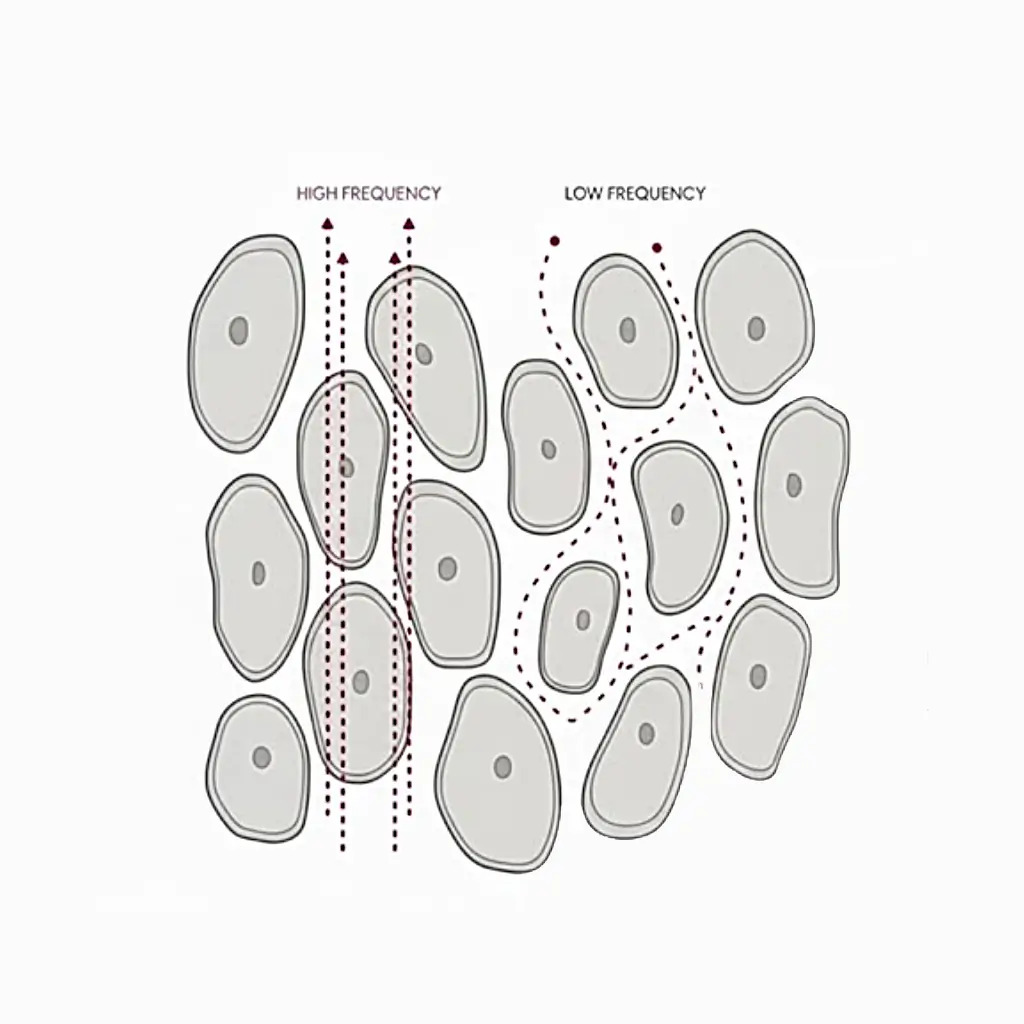
Multiple frequencies
InBody overcomes traditional BIA limitations by using multiple frequencies (1 kHz to 3 MHz) to accurately measure intracellular and extracellular water. This precision is essential for medical applications like nephrology and rehabilitation.
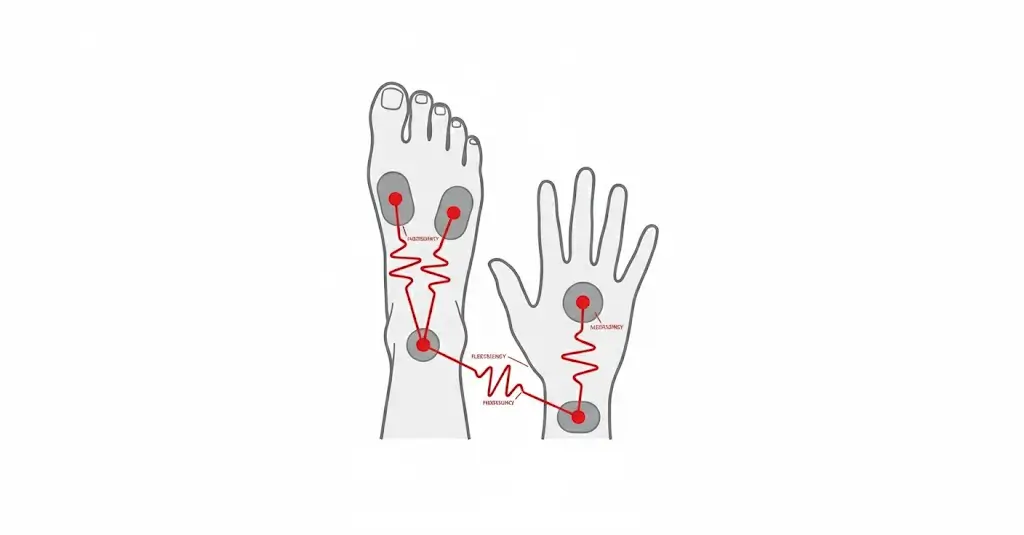
8-point tactile electrode system
When measuring impedance with electrodes, contact resistance occurs. InBody accounts for contact resistance with strategically placed electrodes to ensure that measurements are accurate and reproducible.
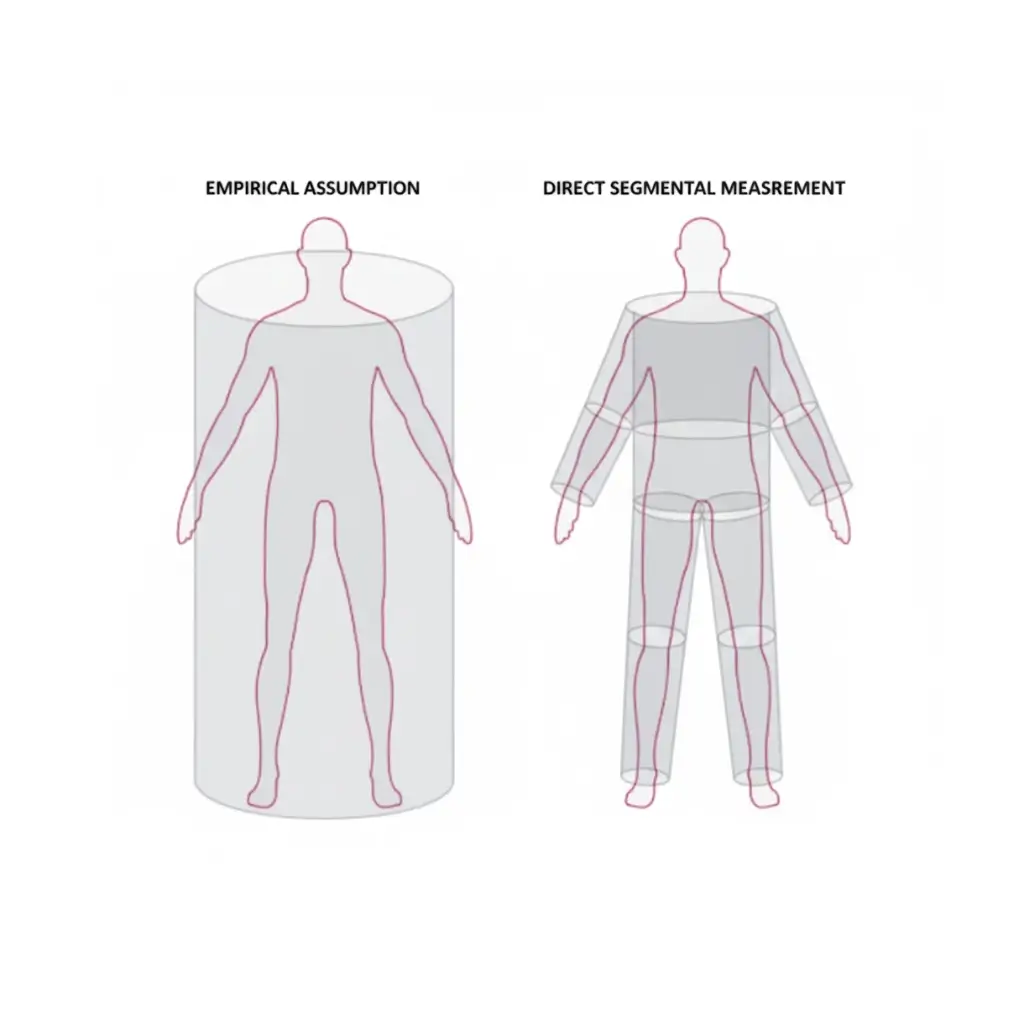
Direct segmental measurements
Traditional BIA views the human body as one cylinder. However, the torso of the body needs to be measured separately because even an error of 1-2 ohms in measurement can lead to substantial error in total body water measurements.
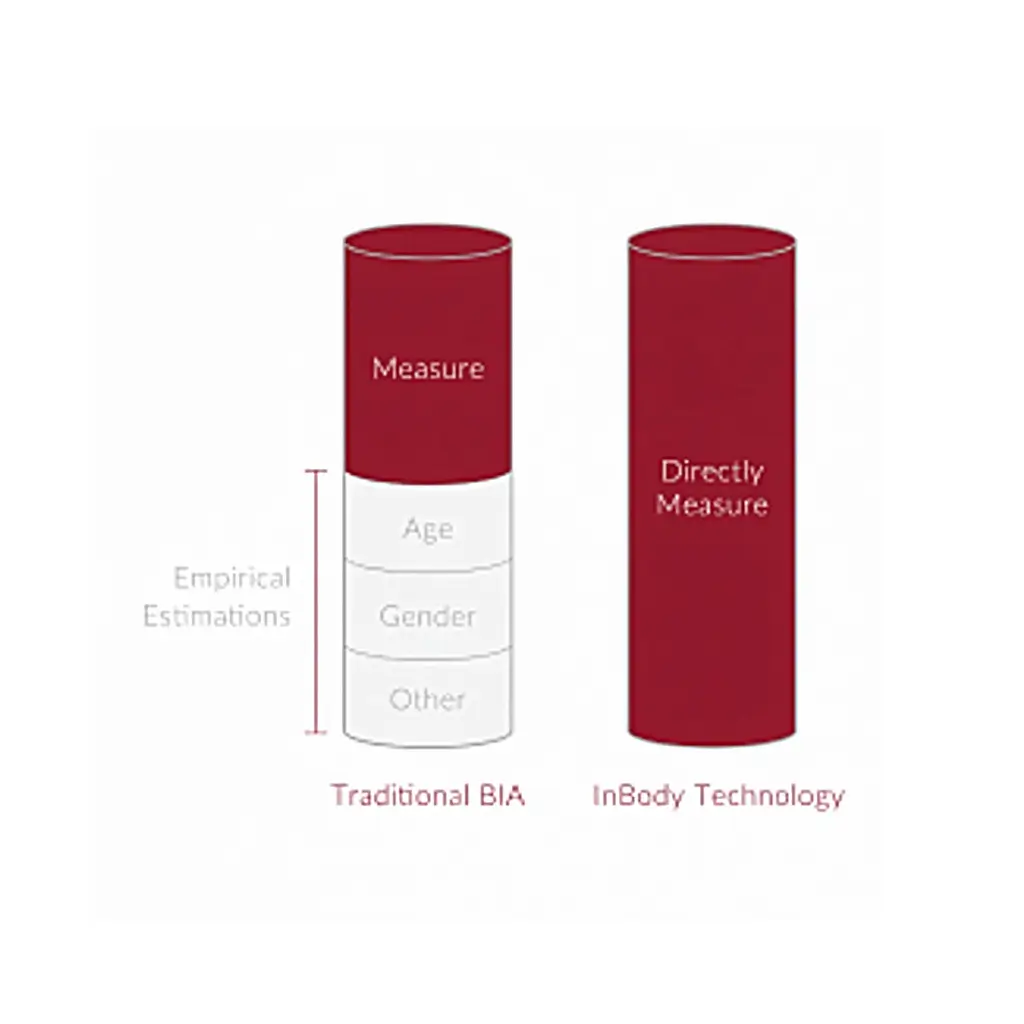
No empirical estimations
No empirical estimations
InBody eliminates empirical equations that rely on age, gender, and ethnicity for body composition analysis. Instead, it directly measures impedance across five body segments, ensuring accurate results without predetermined estimates.
Why measurement method matters
Why measurement method matters
Why measurement method matters
InBody devices
Other BIA devices
Multiple frequencies vs single frequency
InBody devices use a range of frequencies, both low and high, allowing the currents to pass through cell membranes and measure both extracellular and intracellular water. This enables more precise determination of total body water and improves the accuracy of body composition analysis.
8-point tactile vs traditional electrodes
InBody uses an 8-point tactile electrode system with thumb and foot electrodes so that the measurement always begins from the same anatomical points (hands and feet). This improves reproducibility and measurement consistency across repeated tests.
Segmental measurement vs single-cylinder assumption
InBody’s Direct Segmental Multi-Frequency BIA (DSM-MFBIA) measures five separate body cylinders (left arm, right arm, torso, left leg, and right leg). This independent segmental measurement provides more accurate and detailed body composition data across all segments.
Empirical estimations vs direct impedance measurement
InBody does not use empirical estimations. Instead, it relies on directly measured impedance data from each segment at multiple frequencies, so results are individualized and not influenced by demographic assumptions.
InBody devices
Other BIA devices
Multiple frequencies vs single frequency
InBody devices use a range of frequencies, both low and high, allowing the currents to pass through cell membranes and measure both extracellular and intracellular water. This enables more precise determination of total body water and improves the accuracy of body composition analysis.
8-point tactile vs traditional electrodes
InBody uses an 8-point tactile electrode system with thumb and foot electrodes so that the measurement always begins from the same anatomical points (hands and feet). This improves reproducibility and measurement consistency across repeated tests.
Segmental measurement vs single-cylinder assumption
InBody’s Direct Segmental Multi-Frequency BIA (DSM-MFBIA) measures five separate body cylinders (left arm, right arm, torso, left leg, and right leg). This independent segmental measurement provides more accurate and detailed body composition data across all segments.
Empirical estimations vs direct impedance measurement
InBody does not use empirical estimations. Instead, it relies on directly measured impedance data from each segment at multiple frequencies, so results are individualized and not influenced by demographic assumptions.
InBody devices
Other BIA devices
Multiple frequencies vs single frequency
InBody devices use a range of frequencies, both low and high, allowing the currents to pass through cell membranes and measure both extracellular and intracellular water. This enables more precise determination of total body water and improves the accuracy of body composition analysis.
8-point tactile vs traditional electrodes
InBody uses an 8-point tactile electrode system with thumb and foot electrodes so that the measurement always begins from the same anatomical points (hands and feet). This improves reproducibility and measurement consistency across repeated tests.
Segmental measurement vs single-cylinder assumption
InBody’s Direct Segmental Multi-Frequency BIA (DSM-MFBIA) measures five separate body cylinders (left arm, right arm, torso, left leg, and right leg). This independent segmental measurement provides more accurate and detailed body composition data across all segments.
Empirical estimations vs direct impedance measurement
InBody does not use empirical estimations. Instead, it relies on directly measured impedance data from each segment at multiple frequencies, so results are individualized and not influenced by demographic assumptions.
The history of BIA technology
1969
Hoffer et al. and the impedance index
In 1969, Hoffer et al. conducted a series of experiments to prove that total body water and bioelectrical impedance were highly correlated, suggesting that impedance measurements could be used for determining total body water.
In 1969, Hoffer et al. conducted a series of experiments to prove that total body water and bioelectrical impedance were highly correlated, suggesting that impedance measurements could be used for determining total body water.
1969
Hoffer et al. and the Impedance Index

In 1969, Hoffer et al. conducted a series of experiments to prove that total body water and bioelectrical impedance were highly correlated, suggesting that impedance measurements could be used for determining total body water.
1969
Hoffer et al. and the Impedance Index
In 1969, Hoffer et al. conducted a series of experiments to prove that total body water and bioelectrical impedance were highly correlated, suggesting that impedance measurements could be used for determining total body water.
1969
Hoffer et al. and the Impedance Index
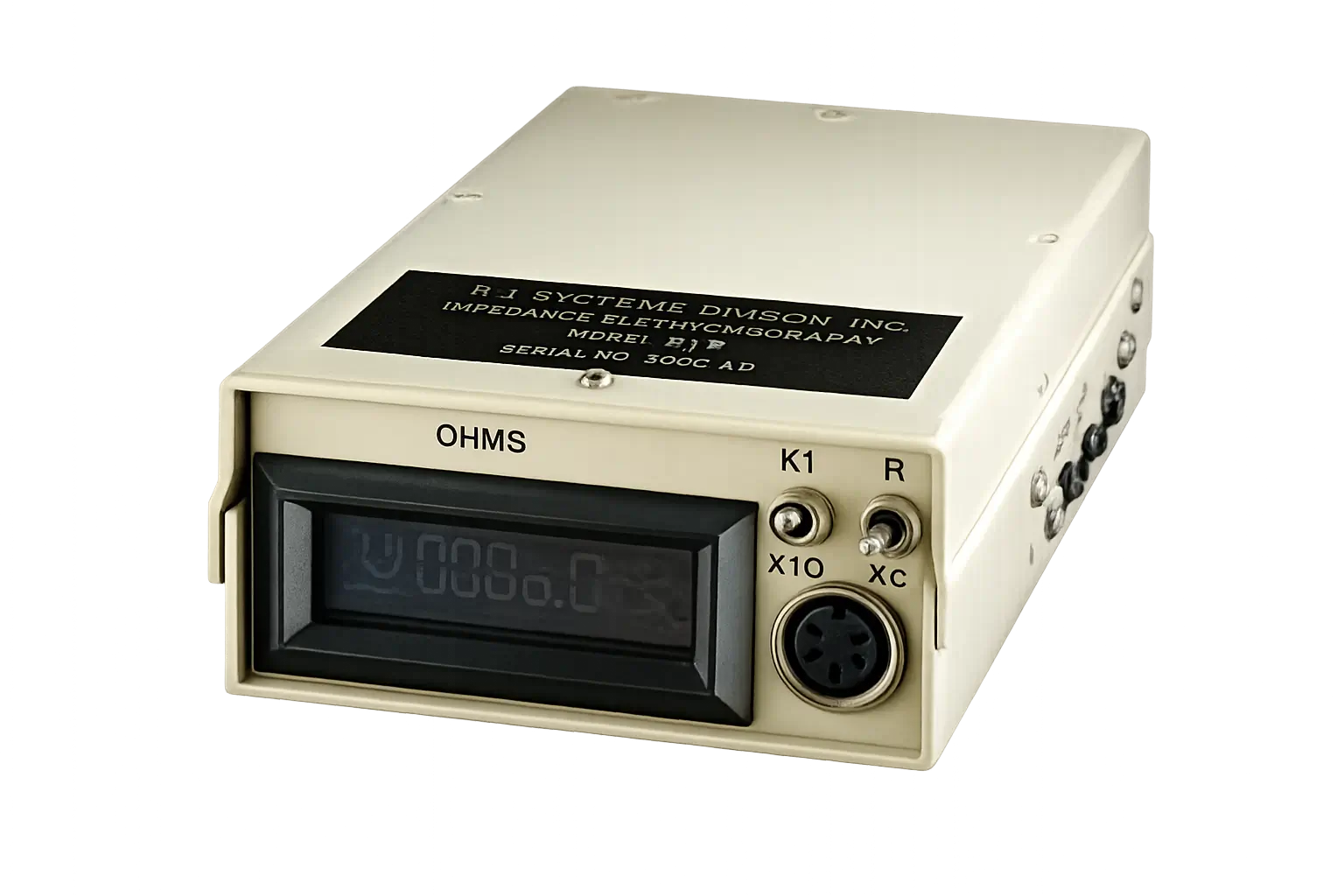
1979
RJL Systems and the First Impedance Meter
In 1979, RJL Systems made the first commercialized impedance meter that helped popularize the BIA method. The device measured impedance using a 50kHz current applied to the right half of the subject’s body via electrodes attached to the back of the right hand and on top of the right foot.
Previous body composition methods like calipers or underwater weighing were uncomfortable, required skilled technicians to install or operate, and could not test a wide variety of populations. Alternatively, BIA was easy, fast, less expensive, and non-invasive, making it popular with many researchers, nutritionists, and medical experts.
1979
RJL Systems and the First Impedance Meter
In 1979, RJL Systems made the first commercialized impedance meter that helped popularize the BIA method. The device measured impedance using a 50kHz current applied to the right half of the subject’s body via electrodes attached to the back of the right hand and on top of the right foot.
Previous body composition methods like calipers or underwater weighing were uncomfortable, required skilled technicians to install or operate, and could not test a wide variety of populations. Alternatively, BIA was easy, fast, less expensive, and non-invasive, making it popular with many researchers, nutritionists, and medical experts.
1979
RJL Systems and the First Impedance Meter
In 1979, RJL Systems made the first commercialized impedance meter that helped popularize the BIA method. The device measured impedance using a 50kHz current applied to the right half of the subject’s body via electrodes attached to the back of the right hand and on top of the right foot.
Previous body composition methods like calipers or underwater weighing were uncomfortable, required skilled technicians to install or operate, and could not test a wide variety of populations. Alternatively, BIA was easy, fast, less expensive, and non-invasive, making it popular with many researchers, nutritionists, and medical experts.
1979
RJL systems and the first impedance meter
In 1979, RJL Systems made the first commercialized impedance meter that helped popularize the BIA method. The device measured impedance using a 50kHz current applied to the right half of the subject’s body via electrodes attached to the back of the right hand and on top of the right foot.
Previous body composition methods like calipers or underwater weighing were uncomfortable, required skilled technicians to install or operate, and could not test a wide variety of populations. Alternatively, BIA was easy, fast, less expensive, and non-invasive, making it popular with many researchers, nutritionists, and medical experts.
1980s
Development of empirical equations
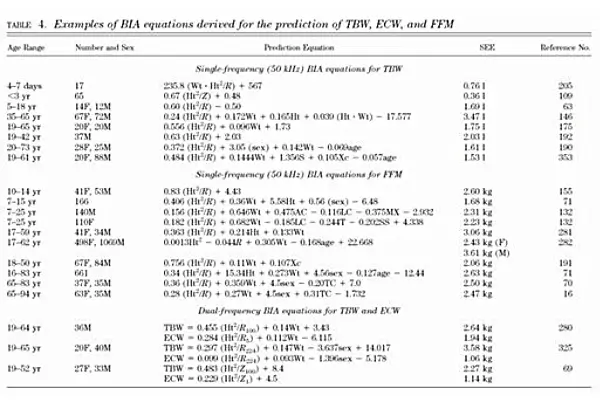
In the 1980s, studies proved BIA had high correlations with gold standard methods, such as underwater weighing and DEXA; however, some technical limitations began to surface.
Two limitations of BIA were its assumption of the human body as a single-cylinder and its use of a single frequency (50 kHz). This method worked for users with standard body types, but it was inaccurate for populations outside of this mold, such as fit elderly adults.
To improve accuracy, researchers derived various population-specific equations based on empirical data like age, sex, and body type for determining body composition.
While empirical estimations may accurately estimate a healthy individual’s body composition, they deliver inaccurate results and oversimplify health risks in population outliers like obese young individuals.
In the 1980s, studies proved BIA had high correlations with gold standard methods, such as underwater weighing and DEXA; however, some technical limitations began to surface.
Two limitations of BIA were its assumption of the human body as a single-cylinder and its use of a single frequency (50 kHz). This method worked for users with standard body types, but it was inaccurate for populations outside of this mold, such as fit elderly adults.
To improve accuracy, researchers derived various population-specific equations based on empirical data like age, sex, and body type for determining body composition.
While empirical estimations may accurately estimate a healthy individual’s body composition, they deliver inaccurate results and oversimplify health risks in population outliers like obese young individuals.
1980s
Development of Empirical Equations

In the 1980s, studies proved BIA had high correlations with gold standard methods, such as underwater weighing and DEXA; however, some technical limitations began to surface.
Two limitations of BIA were its assumption of the human body as a single-cylinder and its use of a single frequency (50 kHz). This method worked for users with standard body types, but it was inaccurate for populations outside of this mold, such as fit elderly adults.
To improve accuracy, researchers derived various population-specific equations based on empirical data like age, sex, and body type for determining body composition.
While empirical estimations may accurately estimate a healthy individual’s body composition, they deliver inaccurate results and oversimplify health risks in population outliers like obese young individuals.
1980s
Development of Empirical Equations
In the 1980s, studies proved BIA had high correlations with gold standard methods, such as underwater weighing and DEXA; however, some technical limitations began to surface.
Two limitations of BIA were its assumption of the human body as a single-cylinder and its use of a single frequency (50 kHz). This method worked for users with standard body types, but it was inaccurate for populations outside of this mold, such as fit elderly adults.
To improve accuracy, researchers derived various population-specific equations based on empirical data like age, sex, and body type for determining body composition.
While empirical estimations may accurately estimate a healthy individual’s body composition, they deliver inaccurate results and oversimplify health risks in population outliers like obese young individuals.
1980s
Development of Empirical Equations

Late 1980s
Consumer BIA device
In the late 80s, Japanese manufacturers released several BIA devices for personal use, which gradually became more popular than professional medical models due to technological constraints mentioned earlier.
Some of these BIA devices were scales that measured the impedance between the user’s feet, while other models were handheld and measured the impedance between the user’s hands.
Both types of models potentially produced inaccurate results because they measured the arms or legs directly and estimated everything else.
Late 1980s
Consumer BIA device
In the late 80s, Japanese manufacturers released several BIA devices for personal use, which gradually became more popular than professional medical models due to technological constraints mentioned earlier.
Some of these BIA devices were scales that measured the impedance between the user’s feet, while other models were handheld and measured the impedance between the user’s hands.
Both types of models potentially produced inaccurate results because they measured the arms or legs directly and estimated everything else.
1992
Kushner & the proposal of multi-frequencies with segmental analysis
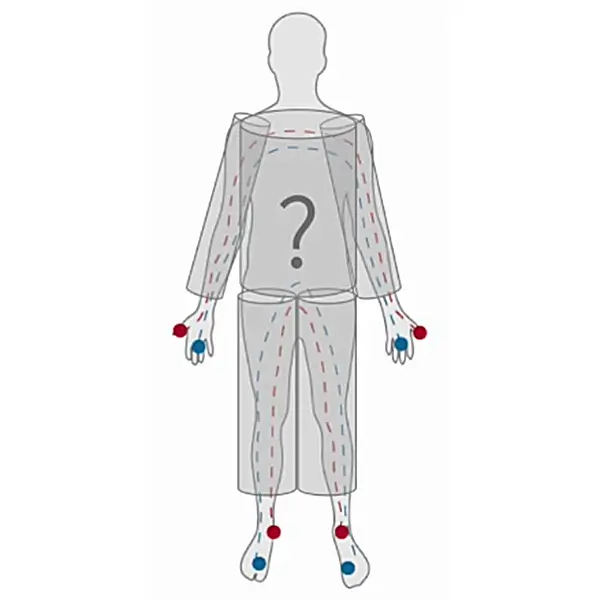
In 1992, Dr. Robert Kushner proposed that the technical limitations of BIA could be improved by measuring the human body as five separate cylinders instead of one. Each cylinder has a different length and cross-sectional area resulting in varying impedance values.
With the single-cylinder model, the thinness and smaller cross-sectional area of the limbs reduce their impact on whole-body impedance. However, since the torso makes up 50% of fat-free mass, it is crucial to measure the torso separately for accurate results.
Kushner also believed it was necessary to measure the body cylinders at different frequencies to distinguish intracellular, extracellular, and total body water. This distinction would allow a better understanding of fluid distribution, providing an accurate measure of the hydrated state of fat-free mass.
1996
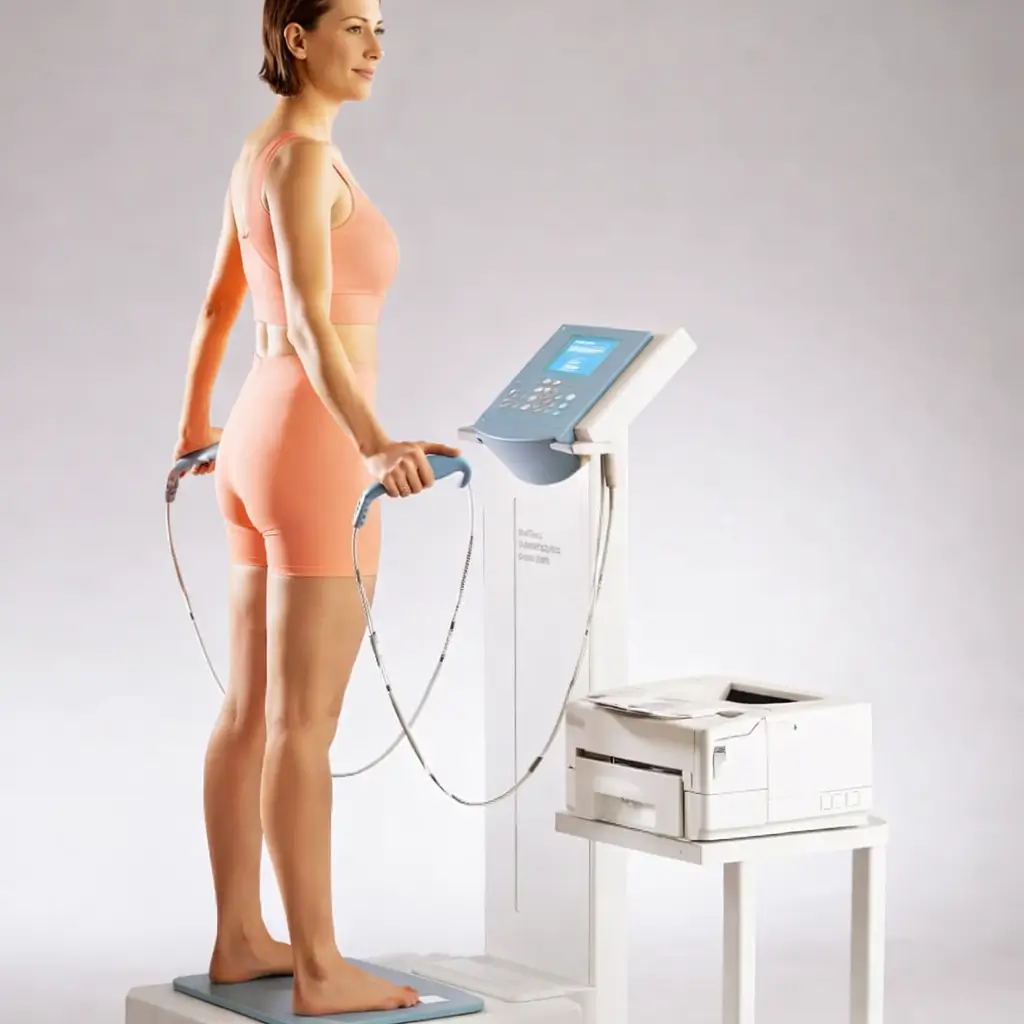
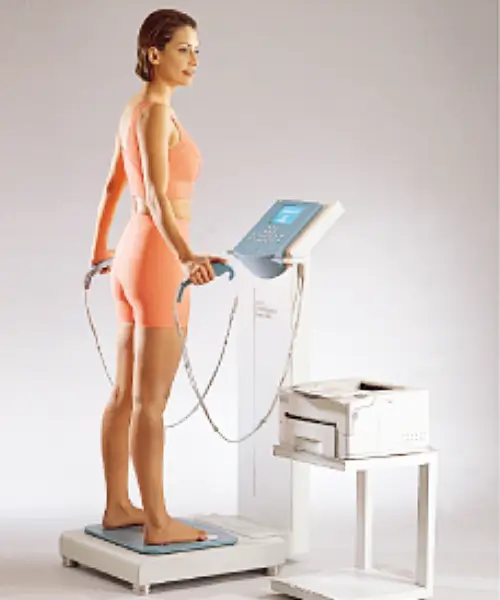
Dr. Cha creates the InBody professional body composition Analyzer
In 1996, Dr. Kichul Cha developed the world’s first 8-point tactile electrode system with direct segmental analysis to measure impedance in the five body cylinders using multiple frequencies (DSM-MFBIA technology).
Many BIA products provide segmental muscle and fat mass measures but not impedance, particularly in the torso.
The InBody device measured impedance in the limbs and torso separately, yielding highly accurate results without using empirical data based on age, sex, ethnicity, athleticism, and body shape. This innovative DSM-MFBIA technology makes the InBody a highly accurate and precise tool ideal for medical, fitness, and clinical applications.
1996
Dr. Cha creates the InBody professional body composition Analyzer
In 1996, Dr. Kichul Cha developed the world’s first 8-point tactile electrode system with direct segmental analysis to measure impedance in the five body cylinders using multiple frequencies (DSM-MFBIA technology).
Many BIA products provide segmental muscle and fat mass measures but not impedance, particularly in the torso.
The InBody device measured impedance in the limbs and torso separately, yielding highly accurate results without using empirical data based on age, sex, ethnicity, athleticism, and body shape. This innovative DSM-MFBIA technology makes the InBody a highly accurate and precise tool ideal for medical, fitness, and clinical applications.

Technology you can trust
Our advanced BIA technology has been validated in over 8,000 clinical studies worldwide and proven amongst the most accurate. Compared to DEXA, InBody has a high correlation to the Gold Standard method for Fat-Free Mass and Body Fat Percentage in an ambulatory population.
"Given the high level of agreement to DXA across BMI categories in estimating FFM and fat mass, S-MFBIA allows providers to further risk stratify patients and develop treatment plans."
Technology you can trust
Our advanced BIA technology has been validated in over 8,000 clinical studies worldwide and proven amongst the most accurate. Compared to DEXA, InBody has a high correlation to the Gold Standard method for Fat-Free Mass and Body Fat Percentage in an ambulatory population.
"Given the high level of agreement to DXA across BMI categories in estimating FFM and fat mass, S-MFBIA allows providers to further risk stratify patients and develop treatment plans."
Technology you can trust
Our advanced BIA technology has been validated in over 8,000 clinical studies worldwide and proven amongst the most accurate. Compared to DEXA, InBody has a high correlation to the Gold Standard method for Fat-Free Mass and Body Fat Percentage in an ambulatory population.
"Given the high level of agreement to DXA across BMI categories in estimating FFM and fat mass, S-MFBIA allows providers to further risk stratify patients and develop treatment plans."